فوائد اعاده التدوير

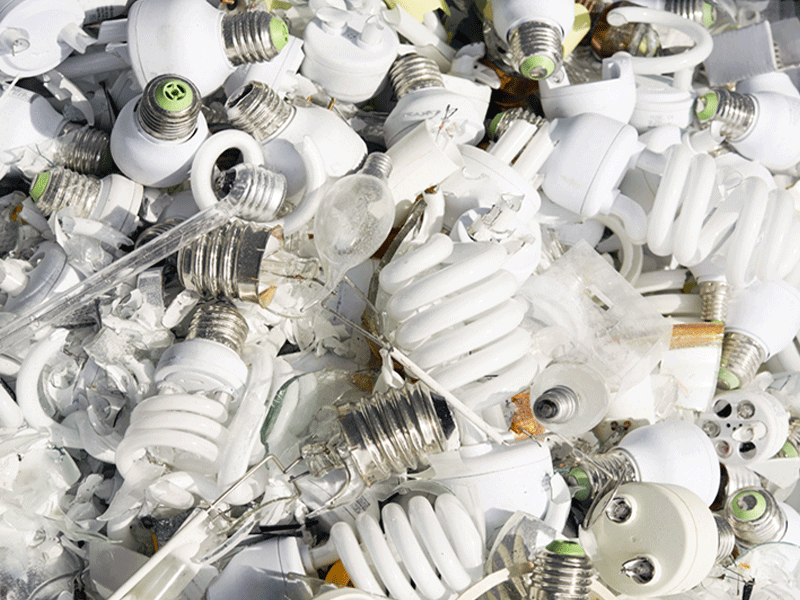
Recycling_bins-Singaporeإعادة التدوير هي عملية تستخدم فيها مواد من النفايات اليومية يتم تحويلها إلى منتجات جديدة. وتشمل الم يمكن إعادة تدويرها ؛ الزجاج والورق والبلاستيك والمعادن المختلفة.  ان عملية إعادة التدوير تنطوي على فصل النفايات بعد جمعها ومعالجة النفايات القابله للتدوير و تصنيع منتجات جديدة.

الحاجه لاعاده التدوير

ان عمليه تصنيع المنتجات تنطوي على الحصول على المواد الخام من مصادر مختلفة. هذه المواد قد تكون من الغابات أو المناجم. حيث يتم نقلها إلى مكان الصنع عادة” عن طريق البر أو البحر، وهي عملية مستهلكة للطاقة.

 ان عمليه شراء المواد الخام ونقلها تسبب التلوث بالإضافة إلى استخدام الموارد الشحيحة مثل الأشجار وأنواع الوقود الأحفوري. كل هذا بدوره  يؤدي الى الاحتباس الحراري من خلال إطلاق الغازات وتآكل طبقة الأوزون التي تحمي الأرض من الأشعة الضارة من الشمس. ويلقى باللوم على ظاهرة الاحتباس الحراري تغير المناخ وعواقبه الكارثية منها هطول الأمطار في غير موسمها أو الجفاف مما يتسبب في  حدوث الفيضانات والمجاعة.

عادة” ما يتم التخلص من النفايات بدفنها في مكبات  أو حرقها.هذه الطريقه تأخذ حيزا شاسعا من  مساحات الأراضي ويمكن أن تلوث المياه ألجوفية في حين أن حرقها يسهم في زيادة ظاهرة الاحتباس الحراري.

مزايا إعادة التدوير

إعادة تدوير النفايات يقلل من الطلب على المواد الخام . كما أنه يقلل من عمليه التخلص من النفايات عن طريق طمرها في المكبات او حرقها ، وبالتالي يساعد في تقليل التلوث والاحتباس الحراري. وتعتبر عمليه  إعادة التدوير على أنها مفيدة للغاية لأنها لا تقلل فقط من كمية النفايات المنزلية التي يتم إرسالها إلى المكبات و المحارق التي   بدورها تلوث البيئة  بل هي أيضا وسيلة لتحقيق التنمية المستدامة حيث يمكننا أن نساعد بالحفاظ على البيئة للأجيال القادمة.

recycling-bin-jeddah

عمليه التدوير بدورها أيضا  تقلل التلوث  وذلك بالحد من الحاجه لجمع المواد الخام . إذا لم يتم إعادة تدوير المواد المستخدمة فان تصنيع منتجات جديدة  سوف يتم باستخدام مواد خام جديدة  من الغابات و استخدام عمليه التعدين. وبذلك فان التدوير يساعد في الحفاظ على الموائل الطبيعية . إعادة التدوير أيضا توفر الطاقة حيث ان الطاقة  تستخدم لاستخراج المواد الخام فضلا عن عمليات الصقل والنقل والتشييد.

قامت كل من جنوب أفريقيا والمملكة المتحدة بتنفيذ مشاريع إعادة تدوير ذات كفاءة عاليه و التي تم تنفيذها من قبل المنظمات غير الحكومية . وقد نفذت هذه المشاريع على اختلاف مسمياتها في جميع  أنحاء البلاد . وقد تم تجهيز أماكن مثل المراكز التجارية و المدن والمطاعم بحاويات ذات الوان  مرمزه بحيث يرمز كل لون لنوع نفايات محدد.  المملكة المتحدة نفذت عمليه فصل النفايات المنزلية تحت إشراف و توجيهات السلطات البلدية .

 يجب على  السكان والشركات فصل القمامة ووضعها في أكياس منفصلة  ليتم جمعها. غالبا ما يتم تمرير غرامة إذا لم يتم تنفيذ عمليه الفصل.

بعض الامثلة

نوع المواد المقبولة لإعادة التدوير تختلف من مدينة و بلد. كل مدينة و بلد لديها برامج إعادة تدوير مختلفة و التي يمكن ان تتعامل  مع أنواع مختلفة من المواد القابلة لإعادة التدوير.على سبيل المثال ،يعد الألمنيوم من المنتجات الاستهلاكية الأكثر معاد تدويرها في العالم. كل عام،صناعة الألمنيوم تدفع أكثر من 800 مليون دولار أمريكي لعلب الألمنيوم الفارغة.

إعادة تدوير علب الألمنيوم هو عملية حلقة مغلقة حيث ان علب المشروبات المستخدمه  التي يتم إعادة تدويرها تستخدم في المقام الأول لصنع علب المشروبات.علب الألمنيوم المعاد تدويرها  تستخدم مرة أخرى لإنتاج علب جديدة أو لإنتاج منتجات المنيوم اخرى  ذات قيمة مثل كتل ألمحركات وو اجهات المباني و الدراجات. في أوروبا حوالي 50٪ من الألمنيوم شبه المصنع والذي يستخدم لإنتاج علب المشروبات الجديدة وغيرها من منتجات التعبئة والتغليف يأتي من الألمنيوم المعاد تدويره.

من بين اللدائن تعد زجاجات التيريفثاليت و البولي اثيلين عالي الكثافة الاكثر اعاده للتدوير وتشكل جزءا لا يتجزأ من برامج إعادة التدوير ولها استخدامات كثيرة وأسواق راسخة. . ولقد زاد نمو  إعادة تدوير الزجاجات من خلال تطوير تكنولوجيات التجهيز التي تزيد من درجات نقاء المنتج وتقليل التكاليف التشغيلية.

ترجمة

سلام عبدالكريم عبابنه

مهندسه مدنية في شركة المسار المتحده للمقاولات – مهتمه في مجال البيئه و الطاقة المتجدده

Land Degradation in the MENA Region – Causes, Impact and Response

Globally, around 15% of the total land is degraded. For The Middle East and North Africa (MENA) region, this number is close to 50%. Land degradation, in general, is the loss of physical, biological and economic productivity of land due to anthropogenic factors; desertification is its subset as it is relevant specifically to the arid, semi-arid, and dry sub-humid areas.

land degradation in MENA

Land degradation is a growing global crisis, undermining food security, biodiversity and the health of ecosystems. Driven by deforestation, unsustainable agriculture, overgrazing and climate change, it affects over 3.2 billion people worldwide. The problem is especially severe in regions with fragile environments and limited water resources—conditions that define much of the Middle East.

Much of the area experiences arid to semi-arid climates, characterized by low rainfall, high evaporation rates, and frequent droughts. These harsh conditions make natural ecosystems fragile and highly sensitive to change. Beyond human use, MENA’s diverse ecosystems—ranging from desert flora to Mediterranean forests—support unique biodiversity adapted to extreme environments. However, the region’s ecological balance is under threat.

Causes of Land Degradation

Among the most pressing causes of land degradation are climatic stressors, unsustainable land use practices, rapid urban expansion and conflict-related disruption.

Climatic Stressors

Among climate stressors, water scarcity is the most prominent manifestation. As much as 83% of the population of Middle East is exposed to extremely high water stress and among the most water stressed countries in the world are Bahrain, Cyprus, Kuwait, Lebanon, Oman and Qatar, all being from this region. This situation is further exacerbated by climate change. Prolonged droughts are becoming more frequent and intense as in Iran, Syria and Iraq.

Rising temperatures and decreasing rainfall accelerate desertification, reducing the productivity of land and increasing the risk of dust storms and soil erosion. These changes weaken the resilience of both natural ecosystems and agricultural systems, locking communities into a cycle of environmental decline.

Agricultural Practices

Unsustainable agricultural practices further worsen land degradation. With less than 5% of the land suitable for cultivation, the MENA region is especially vulnerable to soil erosion, salinization and desertification. However, this land is required to cater to food security requirements and economic growth of this region; livestock forms an important component for both. Fodder requirement for the livestock have led to overgrazing, a major driver of land degradation in this region. It strips vegetation cover, exposing soil to wind and water erosion. In irrigated areas, poor water management leads to salinization, where salt builds up in the soil and reduces fertility.

Another identified manifestation, along with overgrazing has been the excessive use of agricultural chemicals. This affects the biological health of soil as well can lead to salinization and acidification – hence, reducing land productivity.

Urban Development

Urbanization and industrial expansion also take a heavy toll. The urban population in this region has increased from 46% in 1975 to 66% in 2023. As cities grow, arable land is paved over or repurposed for construction, leading to soil sealing and permanent loss of productive land.

Mining of minerals in like gold, silver, copper and gypsum and marble quarrying is an important regional economic activity and countries like Saudi Arabia and UAE have plans of expansion of this sector. Further, other industrial activities including that related to oil and gas extraction disturb the soil, disrupt habitats, generate waste and release pollutants, further degrading ecosystems.

Wars and Conflicts

Conflict and displacement are uniquely severe drivers of degradation in the region. Syria, Iraq, Libya and Yemen are in civil war; around 15 million people have been displaced and taken refuge in economically strapped countries such as Jordan, Lebanon, Djibouti and Tunisia. Wars and civil unrest damage infrastructure such as irrigation systems and water networks, rendering agricultural land unusable.

Large-scale displacement forces people into fragile environments where they rely heavily on limited natural resources for survival, often accelerating land degradation through overuse and deforestation. Abandoned farmlands, meanwhile, quickly deteriorate without proper care.

Political Upheavals

Political instability is evident in countries like Syria, Iraq, Yemen and now Palestine that have been conflict zones over prolonged periods, resulting in lack of policies or implementation of makeshift policies, both contributing to land degradation. Disruption of regional land restoration collaboration during such periods exacerbates the situation. Lebanon has been reeling under political leadership vacuum and severe economic crisis since 2019. Land degradation is worsened due to weakened environmental governance and enforcement.

Together, these factors create a multifaceted challenge that demands urgent and coordinated action to prevent long-term ecological collapse.

Consequence of Land Degradation

Food and water security

Food and water security are among the most immediate concerns. As land becomes less fertile due to erosion, salinization and desertification, agricultural productivity drops. Crops yield less, and grazing lands can no longer support livestock, threatening the livelihoods of millions who depend on farming and herding. At the same time, water scarcity intensifies.

Degraded land holds less moisture, and damaged irrigation systems from overuse or conflict waste already limited water supplies. The result is a shrinking capacity to produce food and a growing dependence on food imports.

Economic Implications

Economic costs are significant, especially for rural communities. Land degradation undermines traditional livelihoods, leading to falling incomes, higher food prices, and economic instability. As domestic food production declines, governments are forced to increase imports, straining national budgets. In areas where agriculture once sustained local economies, poverty deepens and economic opportunities shrink.

Loss of Biodiversity

Biodiversity loss is another major impact. As natural habitats are cleared or degraded, plant and animal species face increased pressure. Fragmented ecosystems can no longer support native species, leading to population declines and extinctions. The loss of biodiversity not only harms the environment but also reduces ecosystem services such as pollination and soil fertility.

Human Displacement

Human displacement and social stress are becoming more common as degraded land can no longer support local populations. Families are forced to migrate—often to urban centres—adding pressure to already stretched infrastructure and services. This movement can fuel land disputes, exacerbate social tensions and increase the risk of conflict. In rural areas, the breakdown of traditional ways of life contributes to poverty, unemployment and a loss of cultural identity. Altogether, the impacts of land degradation are deeply interconnected, threatening both ecological balance and human well-being across the region.

Regional Response to Land Degradation

Several significant initiatives across the MENA region are addressing land degradation and promoting restoration. These efforts span national, regional and international levels:

Under Saudi Arabia’s Vision 2030, afforestation is one of the three targets as the country aims to plant 10 billion trees in the coming decades.100+ million trees and shrubs have been planted since 2021.

UNDP is implementing land restoration projects in several Arab countries like Lebanon, Iraq, Somalia, Yemen, and Syria funded by several international governments and agencies.

Lebanon has updated its national strategy for forest fire risk reduction including restoration and recovery planning post the devastating wildfires of 2019.

Among the significant regional initiatives is the Middle East Green Initiative (MGI). Launched in 2021, the MGI backed by commitment from 20 countries aims to plant 50 billion trees across the region, equivalent to and rehabilitation of 200 million hectares of degraded land. It aligns with global frameworks like the UN Decade on Ecosystem Restoration and the G20 Global Initiative on Reducing Land Degradation and Enhancing Terrestrial Habitats. The initiative emphasizes science-based decision-making and regional collaboration.

The sixteenth session of the Conference of the Parties (COP 16) to the United Nations Convention to Combat Desertification (UNCCD) held in Riyadh, Kingdom of Saudi Arabia in December 2024 was a critical milestone in the land restoration journey of this region.

water scarcity in jordan

Challenges and Way Forward

Efforts to combat land degradation in the Middle East and North Africa face several persistent challenges. Institutional limitations—including weak environmental governance, fragmented policies, and lack of enforcement—hinder effective land management. Funding gaps further restrict progress, with many countries struggling to finance long-term restoration and sustainability initiatives. Political instability and conflict in parts of the region disrupt planning, damage infrastructure, and displace communities, making consistent land management nearly impossible.

To move forward, countries must adopt integrated land management approaches that align environmental protection with agricultural, urban, and water policies. Strategies must be climate-resilient, addressing both current degradation and future risks from rising temperatures and extreme weather. This includes investing in sustainable agriculture, water-efficient technologies, and ecosystem restoration.

Success also depends on embedding land restoration within broader sustainable development goals—ensuring that efforts support economic growth, social equity, and environmental health.

Lastly, stronger cross-border cooperation is critical. Land degradation often spans national boundaries, and collaborative efforts—such as shared monitoring systems, joint projects, and knowledge exchange—can amplify impact.

A unified regional response, supported by global partners, is essential to building lasting resilience against land degradation in the MENA region.

كلّما يجب أن تعرفه عن البصمة الكربونية

مع تزايد الوعي العالمي بتغير المناخ وتأثير الانبعاثات على البيئة، بدأ الأفراد والشركات على حد سواء باتخاذ خطوات جادة لمعالجة القضايا البيئية. تُعد البصمة الكربونية، التي تمثل الخطوة الأولى نحو تقليل انبعاثات الكربون، إجمالي الغازات الدفيئة الناتجة بشكل ها.

carbon footprint

لماذا البصمة الكربونية؟

أدى تزايد الوعي العام بشأن التغير المناخي والاحتباس الحراري إلى تنامي الاهتمام بمفهوم “حساب البصمة الكربونية”. ويعترف المجتمع الدَّوْليّ الآن بالحاجة إلى تقليل انبعاثات الغازات الدفيئة للحد من التغير المناخي.

تشمل الطرق الأكثر شيوعًا لتقليل البصمة الكربونية استخدام الطاقة البديلة، والتشجير، وتقليل النفايات، وتحسين كفاءة الطاقة. وتُعد كل من عدد السكان، الناتج الاقتصادي، مزيج مصادر الطاقة الأولية، وكثافة الكربون من العوامل الرئيسية في تحديد البصمة الكربونية لأي دولة.

تُعد البصمة الكربونية أهم دليل على المسؤولية البيئية، إذ تساعد على تحديد تأثيرات المناخ وتقليلها بطريقة فعالة من حيث التكلفة بالتخطيط الاستراتيجي والتشغيلي، وبناء سياسة مناخية، والتقارير البيئية، وغير ذلك. فضلًا على ذلك، فإن البصمة الكربونية تساهم في تعزيز صورة إيجابية وواعية بيئيًا للشركة، ويمكن أن تعزز من مكانتها التسويقية ومن منتجاتها.

ما هي أنواع البصمة الكربونية المختلفة؟

هناك أنواع مختلفة من البصمة الكربونية، مثل بصمة الأفراد، المنظمات، المنتجات، الخِدْمَات، والفعاليات. تختلف طرق وحدود حساب البصمة الكربونية حسب نوعها. وفيما يلي أبرز الأنواع وطرق التقييم الخاصة بها:

1. البصمة الكربونية للمنتج

البصمة الكربونية للمنتج مناسبة للمؤسسات التي تقدم منتجات أو خِدْمَات محددة. وهي تقدم نظرة على انبعاثات الغازات الدفيئة الخاصة بمنتج أو خدمة واحدة. يمكن بعد ذلك توسيع هذا التقييم ليشمل المؤسسة كُلََّها. يمكن تقييم بصمة المنتج إمّا من منظور الأعمال إلى الأعمال (من المهد إلى البوابة) أو من منظور الأعمال إلى المستهلك (من المهد إلى اللحد).

2. البصمة الكربونية للشركة

البصمة الكربونية للشركة مناسبة للمؤسسات التي ترغب في الحصول على رؤية شاملة لانبعاثاتها الكربونية. تبدأ العملية بتحديد أهداف المؤسسة من تقييم الغازات الدفيئة، ثم تحديد الحدود التنظيمية المناسبة، واختيار زمن مرجعية مناسبة، وجمع البيانات، وأخيرًا إعداد خُطَّة لإدارة جودة البيانات.

benefits of sustainable wood

3. البصمة الكربونية لسلسلة القيمة

البصمة الكربونية لسلسلة القيمة تشمل الأنشطة المرتبطة بمنتجات أو خِدْمَات المنظمة عبر كامل سلسلة القيمة. وهذا يشمل الانبعاثات الناتجة عن شراء المواد الخام حتى نهاية عمر المنتج. وتوفر هذه البصمة نظرة شاملة لجميع منتجات وخدمات الشركة.

البصمة الكربونية في الشرق الأوسط

أدى اعتماد العالم على موارد الطاقة في الشرق الأوسط إلى جعل المنطقة من بين الأعلى عالميًا من حيث البصمة الكربونية للفرد. وتُعد صناعات النفط والغاز، وتوليد الكهرباء، والنقل، والتدفئة الصناعية، والتكييف، من أبرز مصادر الانبعاثات الكربونية في المنطقة. وتأتي دول مثل قطر، والكويت، والإمارات، والبحرين، والسعودية ضمن أعلى 10 دول عالميًا من حيث انبعاثات الكربون للفرد. فعلى سبيل المثال، يبلغ معدل الانبعاثات الكربونية في قطر حوالي 38.62 طنًا للفرد، وهو أكثر من ضعف معدل الانبعاثات للفرد في الولايات المتحدة البالغ 13.8 طنًا سنويًا.

ترجمة: عبدالله فيصل السلامة

طالب وطموح يسعى لتحقيق التميز في مسيرته الأكاديمية والمهنية. يتقن اللغتين العربية والإنجليزية. يتميز بشغفه الدائم لاكتساب المعرفة وتطوير مهاراته في مختلف المجالات.

Note: The original English version of the article is available at this link.

10 Different Solar Uses Around The Home

Did you know that solar energy can be used in a variety of ways around the home? In this blog post, we will discuss 10 different ways that solar energy can be used to make your life easier. From powering your home to heating your water, solar energy has a lot to offer! Keep reading for more information on how you can use solar power in your everyday life.

rooftop-solar

1. Provide electricity

One of the most popular solar uses around the home is to provide electricity. In fact, according to the Solar Energy Industries Association, solar energy is now the fastest-growing source of energy in the United States. This is primarily due to advancements in technology, which have made solar panels more efficient and less expensive.

2. Heating water

Another popular solar use is to heat water. In fact, heating water is the most common use of solar energy in the United States. This is because heating water with solar energy is a cost-effective way to save money on your utility bills.

3. Heating home

One of the most popular solar uses for homes is to provide heating. Solar heating systems use panels to collect and convert the sun’s energy into heat, which is then used to heat the home. These systems can be very efficient and can save homeowners a significant amount of money on their energy bills.

4. Solar ventilation fans

Solar ventilation fans are a great way to keep your home cool during the summer. By using solar power to operate the fan, you can keep your home cool without using any electricity. Solar ventilation fans are available in a variety of sizes, so you can find one that is the perfect fit for your home.

5. Lighting home

Solar energy is a great way to power your home and save money on your electric bill. One of the most popular ways to use solar energy in the home is for lighting. You can install solar panels on your roof to collect the sun’s energy and use it to power lights inside and outside of your home. Solar-powered lights are a great way to save energy and money.

solar lights in parking lot

6. Portable solar power

When you’re on the go, there’s no need to worry about losing power. With a portable solar power bank, you can keep your devices charged up no matter where you are. These banks come in a variety of sizes, so you can find one that’s perfect for your needs. Plus, they’re easy to use – just plug them into your device and let the sun do its work.

7. Heating swimming pool

Heating swimming pools with solar energy is a popular use of solar power. A pool can take a lot of heat to warm up, and a solar heating system can do the job much more cheaply than using electricity or natural gas. In fact, a well-designed pool heating system can even provide all the heat your pool needs during the winter months.

8. Solar-powered pumps

One of the lesser-known solar uses is for powering water pumps. Solar water pumps work by using energy from the sun to pump water from a lower to higher elevation. This is a great option for those who live in areas with low water pressure or those who need a reliable water source in case of emergencies. Solar-powered pumps can also be used to irrigate crops or water gardens.

solar-powered pump

Solar power systems are increasingly becoming common in rural areas

9. Charging batteries

Solar energy can also be used to charge batteries. This is a great option for people who have electric vehicles or boats. The sun’s rays can be used to power these vehicles, which is a more sustainable and environmentally-friendly option than using traditional fuels.

10. Cooking

Solar cooking is a great way to reduce your reliance on fossil fuels, and it’s also a great way to save money. You can use solar cookers to cook food, or you can use solar ovens to bake or roast food. Solar cookers and ovens are very versatile, and they can be used to cook a variety of different foods.

Summary

Solar energy is a great way to reduce your carbon footprint and help the environment, and these 10 uses of solar energy are a great way to get started. From powering your appliances to heating your water, solar energy can help you save money and do your part to help the planet.

Renewable Energy Prospects in Africa

With a sixth of the world’s population, Africa generates a measly four percent of the world’s electricity, three-quarters of which is used by South Africa and northern Africa. According to World Bank statistics, more than 500 million Africans (almost two-thirds of the total population) have no access to “modern energy.” Hydropower accounts for around 45% of electricity generation in sub-Saharan Africa (SSA) while biomass (mostly firewood) constitutes about 56 percent of all energy use in sub-Saharan Africa. Large-scale use of forest biomass is accelerating deforestation, and the World Bank estimates that 45,000 square kilometers of forest were lost between 1990 and 2005 across all low-income countries in Africa.

Africa has huge renewable energy potential with some of the world’s largest concentration of alternative energy resources in the form of solar, wind, hydro and biomass energy. Overall, 17 countries in sub-Saharan Africa are in the top-33 countries worldwide with combined reserves of solar, wind, hydro, and geothermal energy far exceeding annual consumption. Most of the sub-Saharan countries receive solar radiation in the range of 6-8 kWh/m2/day, which counts among the highest amounts of solar radiation in the world. Until now, only a small fraction of Africa’s vast renewable energy potential has been tapped.  The renewable energy resources have the potential to cover the energy requirements of the entire continent.

Several African counties, such as South Africa, Egypt, Morocco, Kenya, Senegal, Madagascar, Rwanda and Mali have adopted national targets for renewable energy, and feed-in tariffs for renewable energy electricity have been introduced e.g. in South Africa and Kenya.   Countries such as South Africa, Morocco, Egypt, Cape Verde, Ethiopia, Kenya and Tanzania are developing wind farms.  Geothermal investments are increasing in the Rift Valley area of Eastern Africa.  The pipeline of investments in Africa in hydropower, wind farms, solar PV and concentrated solar thermal, geothermal power and biomass energy underlines the huge potential for a future expansion of renewable energy across the continent.

The African Development Bank, through its public and private sector departments, is currently implementing several clean energy projects and programs to address these priorities particularly in the energy and forestry sectors. The Bank’s energy portfolio currently stands at about USD 2 billion. The AfDB provides two lending windows. The first is a public window, with mostly concessional funds available to governments. The second is a private window, which offers debt and equity on commercial terms. 

Hydroelectric power generation represent an attractive investment in Africa because of tremendous hydropower generation potential, 60% of which is locked within Guinea, Ethiopia and the Democratic Republic of Congo. The AfDB has committed its support to developing the Gibe III hydroelectric dam, in Ethiopia. Wind farms are another lucrative investment arena for AfDB, as shown by AfDB’s commitment for 300MW Lake Turkana Wind Farm in Kenya.  Lake Turkana Wind Power (LWTP) consortium is constructing a wind farm consisting of 353 wind turbines, each with a capacity of 850 kW, in Northwest Kenya near Lake Turkana. The wind power project is expected to reach full production of 300 MW by the end of 2012.  LTWP can provide reliable and continuous clean power to satisfy up to about 30% of Kenya’s current total installed power. 

The Ain Beni Mathar Integrated Solar Thermal Combined Cycle Power Station is one of the most promising solar power projects in Africa.  The plant combines solar power and thermal power, and is expected to reach production capacity of 250MW by 2012. African Development Bank, in partnership with the Global Environment Facility and Morocco’s National Electric Authority, is financing approximately two-thirds of the cost of the plant, or about 200 million Euros.

With growing concerns about climate change, AfDB has compiled a strong project pipeline comprised of small- to large-scale wind-power projects, mini, small and large hydro-power projects, cogeneration power projects, geothermal power projects and biodiesel projects. The major priorities for the Bank include broadening the supply of low-cost environmentally clean energy and developing renewable forms of energy to diversify power generation sources in Africa. The AfDB’s interventions to support climate change mitigation in Africa are driven by sound policies and strategies and through its financing initiatives the Bank endeavors to become a major force in clean energy development in Africa.


5 Reasons Why ESG Goals Are Transforming Corporate Energy Strategy in Southeast Asia

In the heart of Bangkok’s financial district, solar panels gleam atop skyscrapers. In Vietnam’s industrial zones, factories proudly display energy efficiency certifications. Across Indonesia’s archipelago, corporations announce ambitious carbon reduction targets. Throughout Southeast Asia, a profound transformation is reshaping how businesses approach their energy needs.

corporate energy strategy

Environmental, Social, and Governance (ESG) principles have become powerful drivers pushing companies toward cleaner, more sustainable power solutions. The days when energy decisions were made solely on cost and reliability are fading. Today’s corporate energy strategies reflect broader commitments to sustainability, transparency, and responsible business practices. Exploring options like solar Power Purchase Agreements (PPAs) can be a key step for companies looking to align their energy use with their ESG commitments.

Let’s explore the five fundamental reasons behind this shift and how they’re creating lasting change across the region’s business landscape.

1. Investor Demands and Market Forces

“Show me your carbon footprint before I show you my money.” This emerging investor mantra captures a fundamental shift in Southeast Asian financial markets. Investors increasingly view strong ESG performance, particularly regarding energy use and emissions, as indicators of well-managed, forward-thinking companies.

Companies with robust sustainable energy strategies often enjoy lower capital costs, better valuations, and greater appeal to international investors. This financial incentive creates a powerful motivation. Southeast Asian businesses increasingly find that smart energy choices aren’t just good for the planet but essential for their bottom line and investor relations. From Malaysian palm oil producers installing biomass generators to Philippine retailers adopting rooftop solar, companies are discovering that green energy investments attract green financial backing.

2. Navigating the Regulatory Landscape Where Compliance Becomes Strategic

Across Southeast Asia, governments are steadily raising the bar on environmental regulations. Singapore’s carbon tax, Thailand’s energy efficiency standards, Vietnam’s renewable energy targets, and Indonesia’s emissions reporting requirements create a complex regulatory environment that companies must navigate.

These evolving rules directly impact corporate energy planning. No longer can businesses simply budget for electricity as a fixed operational cost. They must now track consumption meticulously, understand their emissions profile, and demonstrate progress toward cleaner alternatives.

Compliance used to be an afterthought in energy procurement. Now it’s often the starting point for the conversation. Companies ask about regulatory requirements first, then build their energy strategy around meeting or exceeding those standards.

This regulatory pressure creates both challenges and opportunities. Forward-thinking businesses are moving beyond mere compliance, using ESG-driven energy initiatives to position themselves advantageously for future regulatory developments. By voluntarily adopting cleaner energy practices today, they reduce the risk of costly adjustments tomorrow when regulations inevitably tighten further.

3. Building Resilience in Uncertain Times

The business case for ESG-aligned energy strategies extends beyond regulatory compliance and investor appeal. It directly addresses operational vulnerabilities that threaten long-term viability.

Climate change poses tangible risks to Southeast Asian businesses, from flooding in coastal manufacturing zones to water scarcity affecting agricultural supply chains. Meanwhile, volatile fossil fuel markets create unpredictable energy costs that can devastate carefully planned budgets.

Smart companies are responding by diversifying their energy portfolios. A manufacturing firm in Thailand, for instance, may be able to invest in on-site solar generation not primarily for sustainability credentials but to insulate itself from grid outages and fuel price fluctuations. Similarly, a Malaysian hotel chain can implement advanced energy management systems that reduce consumption while improving guest comfort through better temperature control.

Energy resilience has become inseparable from business resilience. Which means that renewable energy investments are as much about securing our operational future as they are about meeting our climate commitments.

This perspective transforms how businesses evaluate energy projects. Return on investment calculations now factor in risk mitigation benefits alongside direct cost savings, making previously marginal projects economically attractive when viewed through an ESG lens.

4. Winning Hearts and Markets While Meeting Stakeholder Expectations

Today’s consumers, employees, and communities expect more from businesses. They want to support, work for, and host companies that demonstrate genuine commitment to sustainability, with energy choices often serving as the most visible evidence of these values.

This reality is reshaping corporate priorities. Urban Southeast Asian consumers, just as across the globe, consider a company’s environmental practices when making purchasing decisions, with visible renewable energy use ranking as a particularly influential factor.

The talent equation is equally significant. In competitive labor markets like Singapore and Malaysia, companies report that robust sustainability programs, including clean energy initiatives, have become crucial recruiting and retention tools, particularly for skilled younger professionals.

solar energy and business sustainability


Solar installations can actually become an unexpected recruitment asset. Job candidates may point to it during interviews as evidence that you’re a forward-thinking employer who shares their values.

Community relationships benefit similarly. When a large food processing company in rural Indonesia switched from diesel generators to a combination of solar power and cleaner biofuels, it not only reduced emissions but also eliminated noise pollution that had strained relations with neighboring villages. The improved community rapport led to better local talent recruitment and fewer operational disruptions.

These stakeholder benefits create powerful incentives for ESG-driven energy transformations that extend far beyond direct financial returns.

5. Decarbonization and Where Necessity Becomes Opportunity

At its core, the environmental component of ESG centers on reducing greenhouse gas emissions. For most Southeast Asian businesses, energy consumption represents their largest carbon contribution and therefore their greatest opportunity for meaningful climate action.

This imperative is driving innovation across the region. Companies are pursuing direct power purchase agreements with renewable energy developers, installing on-site generation, upgrading to ultra-efficient equipment, and implementing sophisticated energy management systems.

The Philippines’ largest retailer recently signed the country’s biggest commercial solar agreement, contracting 120 megawatts of clean power for its nationwide operations. In Indonesia, a major cement manufacturer invested in waste heat recovery systems that generate electricity from previously lost thermal energy, simultaneously reducing both emissions and costs.

The transition may have started as a compliance exercise for many of us. But we’ve discovered unexpected benefits along the way, from operational efficiencies to employee engagement. What began as an obligation has evolved into a competitive advantage.

This experience reflects a broader regional pattern where decarbonization initiatives frequently yield innovation dividends. Companies focused on reducing energy-related emissions often discover process improvements, identify waste reduction opportunities, and develop new skills that benefit their operations more broadly.

Transforming Challenge into Leadership

As ESG principles become increasingly embedded in Southeast Asian business culture, their influence on corporate energy strategies will only grow stronger. Companies that embrace this reality, treating sustainability not as a regulatory burden but as a core business imperative, are positioning themselves for long-term success.

The transformation extends beyond individual corporations to reshape entire industries. Sector-wide collaborations are emerging to address shared energy challenges, from renewable energy purchasing consortiums in Singapore to industrial efficiency initiatives in Thailand.

While challenges remain, including grid infrastructure limitations and upfront investment requirements, the direction is clear. ESG considerations have permanently altered how Southeast Asian businesses think about, procure, and manage energy.

Climate Change Impacts in the Levant

Many countries in the Levant — such as Palestine, Lebanon, Jordan, and Syria — are afflicted by water scarcity, weak institutional and governmental resource management, high food import dependency and fragile economies – all coupled with increasing populations and demand. According to the recent reports of the Intergovernmental Panel on Climate Change (IPCC), the Arab World will be witnessing hotter and drier conditions with extensive droughts causing severe water shortages that will have dire impacts on agriculture and livelihood. Farmers in the Levant have been addressing climate change adaptation and resilience issues through farming, water management and environmental degradation. Global climate change is expected to increase the severity of climatic conditions and increase the vulnerability of Levant countries.

climate-change-water-scarcity


1. Water Scarcity

Water scarcity is one of the issues expected to increase with climate change. This will adversely affect livelihoods and sectors like agriculture, which is the largest water user in the country. The Levant region is projected to be one of the most severely impacted region in the world as per most general circulation models (GCMs) due to the expectation of severe water scarcity which will in turn impact its socio-economic development (Assaf, 2009).

The Levant states’ engagement in the UNFCCC process is vital since major regional studies conducted by the Arab Development and Environment Forum forecasts alarming impacts part of which suggests that increasingly scarce water resources will be further reduced between 15-50% in all four countries.

Moreover, due to water loss and land degradation agricultural self-sufficiency is dismal, especially when considering inefficient irrigation techniques that are more suitable to other areas instead of the Levant region, e.g., severe land degradation in the Euphrates Valley of Syria (Nasr, 2009). This in turn will result and influence the whole issue of food security leading to widespread poverty in the region.

The situation may be exacerbated due to current political instability and conflict in the area — noting that Syria is heavily dependent on water resources outside its borders, while Jordon already consumes more than 100% of their available water (Nasr, 2009; Tolba and Saab, 2009). Jordon, ranked as the fourth most water insecure country in the world, has already identified four critical sectors – water, energy, agriculture and food security – in addition to waste reduction and management.

2. Agriculture

Increase in temperatures and decrease in rainfall also characterizes the main climatic changes facing Levant countries such as Lebanon. Agricultural sector in Levant is expected to experience minimal impact of climate change. However, a reduced amount of agricultural land will be available due to desertification and urban expansion. This means that agriculture will be affected and the price of vegetables, fruits, and other agricultural products will rise as well, bringing about negative impacts on marginalized communities.

agriculture in middle east

3. Increase in Sea Level

An additional factor is the expected rise in sea level that could further contaminate the nearby aquifers such as the coastal aquifer of Gaza that should provide water to impoverished Palestinians. The annual decrease in precipitation has led to less freshwater availability for surface or ground water. It is being projected that a one meter rise in 50 years will cause salt intrusions in Iraq well into the north beyond Basra and intrude into water aquifers in Lebanon, as far as downtown Beirut and Dbayyeh areas (Nasr, 2009).

4. Political Vulnerability

With stringent Israeli control on natural resources use and management, the Palestinian Authority lacks the capacity to enforce regulations and mechanisms to ensure the integ1ration of climate change impacts into development planning in the country. This ultimately increases the vulnerability of governmental and nongovernmental institutions and further intensifies the vulnerability and exposure of communities to the effects of climate change.

Nevertheless, climate change adaptation planning is supported by governmental institutions like the Ministry of Environmental Affairs, Ministry of Agriculture and the Water Authority in addition to environmental NGOs and engaged stakeholders. Similar to Jordan, Palestine climate projections clearly state that water shortages will increase, increasing the water asymmetry already existing due to the unequal use of water between Israel and Palestinian areas.

5. Economic Considerations

In the Levant region, the water sector currently undergoes several environmental stresses resulting from different socio- economic activities and practices, including agriculture, energy, and transport. The potential impacts of climate change on the coastal zone include losses in coastal and marine economic activities such as tourism, agriculture, fisheries, transportation and other essential services. Coastal communities relying on ecosystem services, such as fishing for livelihoods will bear the impacts of increase in sea water temperature as the marine fish stock might decrease and marine biodiversity may change or decline.

biodiversity_jordan


In countries such as Lebanon, the coastal zone has very high population density (estimated at around 594 inhabitants per km2) and is characterized by a concentration of Lebanon’s main economic activity. In fact, the largest Lebanese cities (Beirut, Saida, Tripoli and Tyre) are located along the coast, and contribute to more than 74% of Lebanon’s GDP through commercial and financial activities, large industrial zones, important agricultural lands as well as fishing and tourism.

In addition to organizational and technical constrains similarly faced by other Levant countries, Palestine is also experiencing political constrains due to the Israeli situation. The shared trans-boundary groundwater is unequally distributed  with Israel using more than 80% of Palestinian water resources.

Research Gap

Due to economic growth and increasing population, energy demand is expected to rise by at least 50 percent in some countries over the next 20 years. The provision of reliable energy supply at reasonable cost is thus a crucial element of economic reform and sustainable development. Transportation sector is of crucial importance for the regions further economic development.

In general terms, lack of and access to data are the main barriers that proved to be the most hindering. The lack of statistics particularly affects the assessment of GHG emissions and economic development scenarios. In turn, governments have blamed the weak economic base for the inability to support research.

The absence of scientific assessments and research in terms of assessing e.g. economic impacts of climate change, the ecological impacts of global warming and the degree of resilience of the different systems are hindering the prioritization of adaptation strategies in the decision-making process.

Syria’s Crisis and Jordan’s Water Struggle: Lessons Learned

Jordan has had to accept being labeled a Refugee Country since its independence, as the country has absorbed several waves of refugees from neighboring countries in a region of uncertainty.  It began with the Arab-Israeli Wars in 1948 and 1967, followed by the Gulf Wars in 1991 and 2004, and ended with the most recent conflict in Syria, which added 1.4 million refugees to the country’s population. This posed extraordinary challenges to Jordan’s water sector, which lacked the necessary resources to meet the increased demand. Former UN High Commissioner for Refugees and current UN Secretary-General Antonio Guterres summed up Jordan’s experience in 2014, saying that “the simple act of providing water to Syrian refugees living in Jordan is a daily miracle.”

lessons learnt by Jordan's water sector from the Syrian crisis

In addition, Jordan’s population has increased from 2 million in 1975 to around 10 million in 2020 due to a combination of organic growth and refugee influxes. Jordan’s urbanization has steadily increased, and in 2020, 91 percent of Jordan’s total population lived in urban areas and cities, up from 86 percent in 2010. The country’s population growth, improved living standards, and other social and economic developments have all contributed to an increase in municipal water demand.

The total municipal demand in 2020 was estimated to be 641 million cubic meters, and it is expected to increase by 31% by 2040, reaching 811 million cubic meters. This will result in a 148 percent increase in the supply gap between demand and available municipal water supply by 2040, reaching 530 million cubic meters. An estimated 20% of total water consumption in 2020 will be reliant on overexploited groundwater resources.

Even though Jordan contributed very little to climate change, it is expected to suffer far more than other countries, with less precipitation, dwindling groundwater resources, and rising temperatures in the forecast.

The UNFCCC predicts a 13.6 percent decrease in rainfall and a 1.6 degree Celsius increase in temperature by 2035. This would imply a 15% decrease in long-term groundwater recharge and a 15% decrease in long-term surface water runoff. As a result, available freshwater renewable water resources decreased from 500 m3 per capita per year to 140 m3 per capita per year between 1975 and 2010 and will be further reduced to 60 m3 per capita per year by the year 2035. This will pose exceptional challenges to Jordan’s water security unless the country develops new unconventional water resources to meet demand.

Furthermore, Jordan’s unique topography necessitates water pumping over extremely high elevational differences of more than 1,300m and long distances of more than 300km between available surface and groundwater resources and population centers. This has resulted in high operating costs, with electricity being the most significant contributor. One of the major challenges confronting the water sector is maintaining current water production while also securing the necessary investments to meet the country’s future water demand.

In terms of water management, the arrival of Syrian refugees in 2011 created a “crisis on top of a crisis.” The northern region was hardest hit by refugees, with the population increasing by more than 20% in just two years. The internal displacement of refugees resulted in a settlement pattern that differed markedly from previous crises. Around 85 percent of the refugees lived in host communities, adding to the strain on already overburdened systems. Prior to the crisis, the population was served by an intermittent water supply regime, which meant that there was no buffer to accept additional needs and demands.

Zaatari-refugee-camp

Syrian refugees at Za’tari refugee camp

The experience in dealing with the Syrian crisis has gifted the water sector with valuable lessons to become resilient in dealing with similar humanitarian and emergency scenarios.

1. Planning

Water and wastewater treatment projects typically have planning horizons of 25 to 30 years. The arrival of a large number of refugees necessitates earlier investments and raises future costs for water resource development. Donor assistance focuses on investments; however, operational costs are not covered. This jeopardizes the long-term viability of existing and new investments because Jordan’s government is unable to fund the additional resources required through its own revenues.

2. Fundraising

To maximize fundraising, it is critical to move away from short-term planning horizons and capitalize on short-term media attention. The fact that settling refugees in countries with similar socio-cultural backgrounds has reduced tensions and required much less funding (Germany, for example, has budgeted 12 billion EUR for settling 1 million refugees on its land) should aid in the more effective use of limited refugee support funds. Operating costs incurred as a result of providing services to refugees must be factored into the funding.

3. Coordination

For targeted and effective action, early coordination among all stakeholders is required. This contributes to lowering the enormous administration and management costs by establishing focal points within national authorities to coordinate and integrate ongoing investment programs and short-term humanitarian assistance.

lessons learnt from Syrian crisis

Integration of refugees within host communities is preferable as a means of accommodating large numbers of refugees while limiting the establishment of temporary camps, but it can only be accepted if the international community guarantees the resources to reinforce and manage the related infrastructure. Establishing a nationwide related refugee development fund, rather than separate individual or bilateral funding arrangements, and having a multi-sector task force manage and use such funds is thus critical.

Final Remarks

The international community’s reduced support forces refugees to internalize within Jordan and migrate to other countries within and outside the Middle East region. Jordan is by far a stable country that has hosted a large number of refugees from various neighboring countries. Experience has shown that refugees stay for an average of ten years or longer, but international support typically declines over time due to ‘donor fatigue,’ which cannot be accepted. If the necessary international assistance is not secured, Jordan’s water sector will be driven from crisis management to a partial meltdown of service delivery, with serious consequences for stability.

القطاع الزراعي والتجارة الإلكترونية: الامن الغذائي والتنمية المستدامة

مع دخول التكنولوجيا  الرقمية في جميع مجالات الحياة ،يشهد القطاع الزراعي تطوراً ملحوظاً في السنوات الأخيرة، ومن أبرز هذه التطورات تزايد الإعتماد على التجارة الإلكترونية كوسيلة حديثة لتسويق وبيع المنتجات الزراعية  الطازجة والمصنعة مما يتيح  فرصاً جديدة للمزارعين.

ويلعب القطاع الزراعي دوراً محورياً  في دعم الإقتصاد الوطني وتحقيق الأمن الغذائي والتنمية المستدامة، خاصة في الدول النامية. ومع التقدم التكنولوجي السريع بدأت التجارة الإلكترونية تفرض نفسها كوسيلة فاعلة لربط المنتجين بالمستهلكين وتخطي القيود الجغرافية والتقليدية في التسويق والتوزيع والإستغلال الأمثل للموازنات المختلفة والتكاليف المالية الكبيرة في انشاء مواقع جغرافية أو دعم أنشطة وفعاليات مؤقتة مثل البازارات والمهرجانات وغيرها . في المجمل يُعد دمج التجارة الإلكترونية بالزراعة نقلة نوعية نحو اقتصاد أكثر شمولاً واستدامة، مما يسهم في تحسين دخل المزارعين، تقليل الفاقد من المنتجات، وتحسين جودة سلسلة الإمداد الزراعي.

digital tech in agriculture

 فالتجارة الإلكترونية عملية بيع وشراء البضائع والخدمات عبر الشبكة العنكبوتية ( الإنترنت) والتي  يمكن لعملاء التجارة الإلكترونية  من خلالها إجراء هذة العمليات بواسطة أجهزة الحاسوب  الخاصة بهم بالإضافة إلى نقاط الاتصال الأخرى، بما في ذلك الهواتف الذكية والساعات الذكية والمساعدات الرقمية وأي أجهزة رقمية متاحة.ومن أشهر الخدمات الإلكترونية المتاحة حالياً خدمة المستهلك لمستهلك آخر،خدمة التاجر للمستهلك ،خدمة التاجر للتاجر،خدمة الحكومة الإلكترونية.

ولأهمية التجارة الإلكترونية في القطاع الزراعي والتكامل بينهما يمكن تسليط الضوء على  أهمية التجارة الإلكترونية في دعم القطاع الزراعي وضرورة التكامل بينهما حال التفعيل الحقيقي والذي يلمسه المزارع مباشرة من خلال ما يلي :-

1. فتح الأسواق وزيادة العوائد: فالتجارة الإلكترونية تتيح للمزارعين الوصول إلى الأسواق المحلية والإقليمية والعالمية دون الحاجة إلى وسطاء،وبدلاً من الاكتفاء بالبيع في الأسواق التقليدية يمكنه تسويق منتجه مباشرة إلى المستهلك النهائي من خلال المنصات الإلكترونية، مما يعزز الربح ويرفع من القيمة السوقية للمنتجات الزراعية الطازجة والمصنعة لتصل الى المناطق المختلفة داخل وخارج البلاد.

2. تقليل دور الوسطاء: لقد ساعدت التجارة الإلكترونية  بكثير من الدول في تمكين المزارعين من بيع منتجاتهم مباشرة إلى المستهلكين أو التجار، مما رفع من أرباحهم وقلل من استغلال الوسطاء  بالاضافة الى شراء مستلزمات الإنتاج مباشرة  من المصدر وبأسعار مناسبة.

3. زيادة الكفاءة: يمكن تحسين العمليات المختلفة وتقليل الهدر والفاقد  من خلال إدارة المخزون، إدارة الطلبات، والتسليم إلكترونياً.

4. الوصول إلى معلومات السوق: إن اتاحة المنصات الإلكترونية للمزارعين  تساعدهم في معرفة الأسعار، إدارة الطلبات، واتجاهات السوق، مما يساعدهم في اتخاذ قرارات أفضل.

5. تعزيز الشفافية في التسعيرعبر المنصات الإلكترونية :يمكن للمزارعين مقارنة الأسعار وتحديد أفضل الأوقات والأسواق لبيع منتجاتهم، مما يقلل من التلاعب في الأسعار، ويمنحهم قوة تفاوضية أفضل.

6. تحسين كفاءة سلسلة التوريد: حيث توفر التجارة الإلكترونية نظاماً رقمياً لتتبع المنتج من المزرعة إلى المستهلك، مما يضمن جودة المنتج ويقلل من الفاقد الناتج عن التخزين أو النقل غير المناسب

7. تشجيع الابتكار الزراعي وريادة الاعمال الزراعية :من خلال الطلب على منتجات معينة عبر المنصات الإلكترونية يشجع المزارعين على تحسين الإنتاج وتبني تقنيات الزراعة الذكية لتلبية احتياجات السوق.

أما التحديات التي تواجه التجارة الإلكترونية في الزراعة يمكن إجمالها بما يلي

1. ضعف البنية التحتية الرقمية في المناطق الريفية حيث تعاني هذة المناطق من ضعف خدمات الإنترنت أو انعدامها، مما يصعّب على المزارعين استخدام المنصات الإلكترونية أو حتى تلقي التدريب الرقمي.

2. محدودية الثقافة الرقمية والوعي لدى المزارعين بكيفية استخدام المنصات الالكترونية خاصة كبار السن أو ذوي التعليم المحدود، حيث يفتقرون إلى المهارات الرقمية الأساسية التي تتيح لهم استخدام الهواتف الذكية، إدارة التطبيقات، أو التعامل مع نظم الدفع الإلكتروني.

3. تحديات في النقل والخدمات اللوجستية كون نقل المنتجات الزراعية الطازجة يحتاج إلى خدمات تبريد  وتخزين وشحن سريعة وآمنة وكثير من منصات التجارة الإلكترونية لا تزال غير مجهّزة للتعامل مع هذه التحديات.

4. مخاوف تتعلق بجودة المنتج وثقة المستهلكين فما زالت الثقة محدودة او دون الطلب في المنتجات التي تباع الكترونياً وتحتاج الى تدريب وبناء جسور الثقة والعمل بجدية وأمانة لتوصيل المنتج حسب الطلب

5. تحديث أطر قانونية وتنظيمية واضحة البيع الإلكتروني للمنتجات الزراعية لا يزال بحاجة إلى تطوير أطر تشريعية تحمي حقوق المزارعين والمستهلكين، خاصة في ما يتعلق بالتسعير، الجودة، وسياسات الإرجاع.

digital agriculture

فرص مستقبلية للتجارة الالكترونية

واعدة من المتوقع أن يشهد هذا المجال نمواً كبيراً مع ازدياد الاعتماد على التكنولوجيا الذكية حال تطبيقها فعلياً مثل استخدام الذكاء الاصطناعي في توقع المحاصيل والأسعار، وتحليل سلوك المستهلك،إدخال تقنية البلوك تشين(تقنية السجل الرقمي لامركزي) لتوثيق سلسلة الإمداد وضمان الشفافية والموثوقية، وتطوير تطبيقات مخصصة للمزارعين بلغات محلية وبواجهات سهلة الاستخدام  بالاضافة الى الاعتماد على الطائرات المسيّرة (الدرونز) لمراقبة المحاصيل وتقدير الكميات المطلوبة للبيع عبر الإنترنت.

أهم التوصيات لتعزيز التجارة الإلكترونية في الزراعة

  1. توفير التدريب والتوعية الرقمية للمزارعين لبناء القدرات المتخصصة واللازمة
  2. دعم الحكومة للبنية التحتية الرقمية في المناطق الزراعية.
  3. تقديم حوافز ضريبية وتشجيع الابتكار الزراعي الإلكتروني.
  4. تطوير نظام لوجستي متكامل خاص بنقل المنتجات الزراعية الطازجة.
  5. سن قوانين تنظم التجارة الزراعية الرقمية وتضمن حقوق جميع الأطراف. 

ختاماً

يمثل دمج التجارة الإلكترونية في القطاع الزراعي عملياً فرصة ذهبية لتحديث هذا القطاع الحيوي. لكنه يتطلب تعاوناً من الحكومة، القطاع الخاص، والمؤسسات التعليمية لتوفير التدريب، البنية التحتية، والدعم المالي اللازم. فمستقبل الزراعة سيكون رقمياًُ بإمتياز.فقد أصبح من الواضح أن التجارة الإلكترونية لم تعد حكراً على المنتجات الصناعية أو الخدمات، بل أصبحت أداة فاعلة في دعم الزراعة وتحسين حياة المزارعين. إن التحول الرقمي في هذا القطاع ليس رفاهية، بل ضرورة لتعزيز الأمن الغذائي، والحد من الفقر، وتحقيق التنمية المستدامة. وبتكامل الجهود بين كافة الاطراف يمكن تحقيق ثورة رقمية زراعية تفتح آفاقًا جديدة للمجتمعات الريفية والاقتصادات الوطنية

دعم المزارع الاردني واجب وطني يفوق كل الواجبات لانه الذراع الرئيسي لتحقيق الامن الغذائي

An Easy Guide to Green Shopping

With the advent of December, many festivities, celebrations and seasonal parties are planned globally. These events require feverish shopping leading to usage and wastage of more resources. In addition, December is also famous for the shopping mania that grips people from all walks of life. ‘Shopping’ is certainly one of the most famous ‘indoor sport’ being practiced equally by people of developed and developing countries depending on their lifestyle and budget and is mainly being done by the female gender.

ecofriendly shopping

‘Going green’ is a way forward for all of us as it is a lifestyle change including improving our shopping and purchasing habits so that the additional environmental burden can be reduced. The market forces, industries, manufacturers are supported by extensive media and marketing campaigns which lure us to buy more and unnecessary commodities.

The responsibility of environmental stewardship lies on us to control and behave and move to ‘green shopping’ altering our pampered purchasing habits. Start by auditing your lifestyles and shopping list and see where improvement can be achieved to reduce pollution.

Being a green consumer we need to conserve resources, save  energy, and prevent waste by buying  products that are energy efficient, are used or reusable, made with  recycled content or are  recyclable and have no  or less packaging.

ecofriendly shopping

Green shopping involves learning how to buy smartly and keeping environmental considerations in mind. Here are some useful eco-friendly shopping tips:

  • Check if the item is ‘really’ or ‘urgently’ required. May be you do not have an immediate use or can postpone it to any later date.
  • Check what quantity and content of the item is required and for what duration?
  • What are the alternatives to the item in terms of cost, size, number etc.?
  • Buy durable products instead of disposable items. Buy things which last longer and can be reused like rechargeable batteries and avoiding plastic cutlery and plates.
  • Avoid excess packaging. Look for products that have less packaging or buy in bulk meaning less garbage generation, disposal and transportation.
  • Share items with friends. Another way to save resources and energy is to swap and exchange with friends and family instead of buying brand-new products. This includes sharing video games, CDs, DVDs etc. instead of individuals owning them.
  • Buy energy-efficient appliances and electronic items and promote energy-efficient products.
  • Buying useful and sustainable presents and gifts aiming at its use and not cost.
  • Select items made with recycled-content materials.
  • When selecting between two similar products, go for the one you can re-use or re-fill later, or the one that hasn’t wasted resources on a wrapper you’ll throw away as soon as you get home.
  • Buy sustainable products which have the ability to be produced (over and over again) without doing much harm to the environment.
  • Buy locally made or grown food. Local foods are fresher and keep local farmers in business, while avoiding the pollution caused by transporting products around the country or region.

Let us inspire ourselves to live a greener more environmentally friendly, healthy and sustainable lifestyle.

Become a Green Shopper. Explore, Enjoy and Make A Difference!

Ways to Counter Water Scarcity in Jordan

Water scarcity is a reality in Jordan, as the country is counted among the world’s most arid countries. The situation has been exacerbated by the large-scale influx of refugees due to the Syrian crisis. The current per capita water supply in Jordan is measly 61 m3 per year which is almost one-third of the global average. Thus, it is of paramount importance to augment water supply in addition to sustainable use of available water resources.

water scarcity in jordan

How to Augment Water Supply in Jordan?

There are couple of options to increase alternative water supply sources in Jordan – desalination of seawater and recycling of wastewater. Desalination can provide a safe drinking water to areas facing severe water scarcity, and may also help in resolving the conflict between urban and agricultural water requirement needs by providing a new independent water source.

The other way to counter water scarcity in Jordan is by recycling and reuse of municipal wastewater which is an attractive method in terms of water savings. Infact, the reuse of the treated wastewater in Jordan has reached one of the highest levels in the world. The treated wastewater flow in the country is returned to the Search River and the King Talal dam, where it is mixed with the surface flow and used in the pressurized irrigation distribution system in the Jordan valley.

wastewater treatment plant

Another cheap and natural option for wastewater reuse is the construction of wetlands, and surface water reservoirs, which are water storage facilities that are able to collect and hold rain water for later use during dry seasons for irrigation or even for fish farming purposes. To prevent water loss by evaporation, reservoirs should be covered in a specific way to allow air to enter but with minimum evaporation rate. Another option is to install floating solar panels above the reservoir which will not only reduce the evaporation rate but also produce clean energy.

However, technology-based solutions are also raising several environmental and health concerns. Seawater desalination and wastewater treatment are like large-scale industrial projects which are capital-intensive, energy-intensive and generate waste in one form or the other. The desalination process may be detrimental to the marine ecological system as it increases the salinity of seawater.

Similarly, irrigation using recycled municipal wastewater is causing public health concerns. For example, directly consumed vegetables and fruits are excluded from allowable crops. Further studies should be conducted so as to address health issues that might arise from municipal wastewater usage. Effluent irrigation standards should be broadened to encompass a wider range of pathogens, and appropriate public health guidelines need to be established for wastewater irrigation taking into consideration the elimination of steroids.

New Trends to Lookout For

New intervention is needed to satisfy local irrigation demands; irrigation water for agriculture makes up the largest part of total average water used, which accounted for 46% in 2023. The main period of water stress is during summer due to high irrigation demand, and there is therefore a conflict arising between the supply of water for urban use and agricultural consumption.

There has to be a proper combination between improvement of irrigation methods and selection of crop types. Application of updated water techniques, such as micro-sprinkling, drip irrigation and nocturnal, can reduce water loss and improve irrigation efficiency. Infrastructure improvement is also necessary to improving efficiency and reducing water loss.

efficient irrigation methods

Spray irrigation has higher efficiency than traditional methods.

Crop substitution is another interesting method to increase water efficiency by growing new crop types that tolerate saline, brackish, and low irrigation requirements. Such approach is not only economically viable, but also is socially beneficial and viable to mankind in an arid ecosystem.

Mulching system is also highly recommended to reduce evaporative loss of soil moisture and improve microbial activities and nutrient availability. Farmers should use organic manure, instead of chemical fertilizers, to increase quality of water and reduce risk of groundwater contamination and agricultural run-offs.

The industrial sector uses about 5 percent of water resources in Jordan, while releasing harmful substances to the environment (including water). Industries have to put together a water management plan to reduce water intake and control water pollution. For instance, the establishment of a local wastewater treatment plant within a hotel for irrigation purposes is a good solution. Traditional water management solutions, like Qanats, Mawasi and fog harvesting, can also be a good tool in fighting water scarcity in arid areas.

Building Greener Roads: Can Sustainable Infrastructure Reduce Accidents?

The Middle East Journal of Rehabilitation and Health Studies states that road accidents could become the fifth leading cause of death worldwide by 2030. Researchers compared the impact of road accidents in the MENA region by examining data from 21 countries and about 400 million people.

As MENA countries grow and urbanize rapidly, so does the need for smarter, safer, and more sustainable transportation networks. This brings us to ask a compelling question: Can building greener roads help reduce accidents?

road safety mena

Below, we’ll discuss how sustainable infrastructure and smart technology are changing road safety, and why it matters for the Middle East and North Africa.

Rethinking Roads

Traditional road design has long focused on accommodating traffic volume and speed.  Nonetheless, the World Road Association says that safety in the earliest stages of road planning is essential to prevent accidents rather than react to them.

Sustainable road design takes it further by factoring in environmental impact, human behavior, and long-term resilience. Better drainage systems, recycled materials, solar-powered lighting, and green medians reduce the carbon footprint and make roads more visible and less hazardous.

Smarter Infrastructure Through Tech

Sustainable roads don’t come down to the materials used. It’s basically about making roads “smart.”  Technologies like artificial intelligence (AI), sensors, and satellite imaging play an increasing role in road safety enhancements.

AI and Predictive Safety

AI can detect patterns and predict potential accident hotspots. For example, data-driven traffic management systems can analyze congestion trends and adjust signals in real-time to prevent accidents before they happen. Autonomous vehicles (AVs), powered by AI, promise a future with fewer human errors on the road.

Although not yet widespread in the MENA region, the economic implications of AVs are significant. The Economics Observatory notes that AVs could lower insurance costs, reduce traffic-related injuries, and reshape urban planning.

Satellite Eyes in the Sky

The World Economic Forum highlights how satellite technology transforms road safety with real-time monitoring of conditions.

The technology helps city planners and engineers identify damaged roads, illegal encroachments, and other hazards quickly.

Local Innovation: ScanWAI

MENA is not a passive consumer of road tech. Regional innovator ScanWAI has developed infra-monitoring systems that scan and analyze road conditions. Using AI and machine learning, their real-time updates assist municipalities in the region in maintaining safer, longer-lasting roads.

Legal and Economic Incentives

Laws and regulations must evolve alongside infrastructure. But what happens when accidents still occur As part of its 2025 infrastructure goals, Atlanta, Georgia, advocated prioritizing sustainable transportation networks. Propel ATL emphasized the urgent need for sidewalks, protected bike lanes, safe crossings, and bus lanes.

The U.S. city has an average of over 30,000 road accidents reported annually. Propel ATL’s petition couldn’t come at a better time. Ask any Atlanta car accident lawyer, and they’ll say they have their hands full with personal injury claims.

Cities like Atlanta hold negligent parties accountable and ensure victims are compensated fairly. TorHoerman Law says that under Georgia law, injured drivers, passengers, and pedestrians have the right to seek compensation.

The same principles apply in the MENA context. However, legal frameworks must adapt to new tech and sustainable designs, guarantee justice, and encourage compliance.

International Road Safety Report

Design That Protects People and the Planet

Road design that considers sustainability is inherently safer. Narrower roads, better pedestrian crossings, dedicated bike lanes, and more visible signage contribute to fewer collisions.

In Dubai and Doha, urban planners incorporate green spaces and multi-modal transit systems into road networks. These features lower emissions and promote walking and public transport, two modes associated with lower accident rates when compared to car travel.

Can the MENA Region Lead the Way?

Ambitious projects like NEOM in Saudi Arabia and Masdar City in Abu Dhabi show that the region is ready to become a global leader in green infrastructure. As climate concerns and car ownership rise, integrating technology, design, and law into road systems could create a safer future for everyone.

Being in a car accident and dealing with an unscrupulous insurance company is the last thing anyone wants. Besides filing a car accident claim and enlisting personal injury lawyers, the trauma and paperwork that accompany such an experience can be avoided if governments and civil society work together to improve road conditions.

The journey toward more sustainable roads doesn’t stop at eco-friendly asphalt. It involves AI that predicts crashes, urban planning that puts pedestrians first, and laws that ensure everyone plays by the rules.

For MENA residents, it’s about leading the charge toward a smarter, safer future where roads are designed to protect the lives of those who use them.